|
CATEGORIES
|
|
| HEALTH | |
| PRESCRIPTIONS | |
| GENERAL MEDICINE | |
| PERSONAL CARE | |
| MEDICAL AIDS | |
| ANIMAL HEALTH | |
 |
 |
||||||||||||||
|
||||||||||||||
|
||||||||||||||
|
Policies
|
||||||||||||||
|
||||||||||||||
|
Pharmacist
available for contact
|
||||||||||||||
|
||||||||||||||
 |
||||||||||||||
 |
 |
|
|
| Suncare | |||
| Introduction
Skin CancerThere
are three types of skin cancer that have been linked to the excessive
exposure of the sun:
Basal-cell and squamous-cell are slow-growing cancers, named for the sort of skin cell they originate from. These cancers are the predominant forms of skin cancer and are more curable than malignant melanoma. Malignant melanoma grows fast and is the deadliest form of skin cancer. Early
detection is very important and any warning signs should be checked
by a doctor. The warning signs of skin cancer can be seen in moles.
Examine moles with the following signs in mind:
Borders that are irregular Colour variations Diameter larger than a pencil's eraser TanningWhen
you get a tan, the melanocytes in the skin are producing melanin
pigment in reaction to ultraviolet light in sunlight. The pigment
absorbs the UV radiation in sunlight and protects the cells from
UV damage. Melanin production takes some time. You have to expose
yourself to UV for a short period of time to activate the melanocytes.
Exposure to UV need only be for a short period of time, they then
produce melanin over the next few hours. If this process is repeated
over the next 5 to 7 days, then pigment builds up in your cells
to a level that is protective. This applies to those with fair skin,
with some other races, melanin production is continuous and thus
the skin is always pigmented to some level, therefore the incidence
of skin cancer is much lower because cells are constantly protected
from UV radiation by melanin.
|
|||
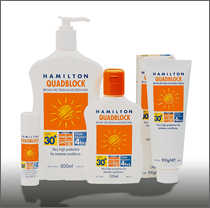 The
sun offers warmth, cleanses the water through evaporation, provides
natural vitamin synthesis and makes plant life grow, but it can
be very damaging to our skin. Sunshine is essential, approximately
15 minutes of exposure a day helps the body make Vitamin D, a substance
vital to the absorption and use of calcium, which is important for
the maintenance of healthy bones and teeth. Longer exposure however,
may cause problems from wrinkles to skin cancer. Malignant melanoma,
a deadly form of skin cancer, has been on the rise as tanning has
become more popular.
The
sun offers warmth, cleanses the water through evaporation, provides
natural vitamin synthesis and makes plant life grow, but it can
be very damaging to our skin. Sunshine is essential, approximately
15 minutes of exposure a day helps the body make Vitamin D, a substance
vital to the absorption and use of calcium, which is important for
the maintenance of healthy bones and teeth. Longer exposure however,
may cause problems from wrinkles to skin cancer. Malignant melanoma,
a deadly form of skin cancer, has been on the rise as tanning has
become more popular. 